Use Claude or ChatGPT on client files, with the names masked first
For lawyers at a firm and in-house counsel. This page shows two tasks on client files: what you see on your Mac, and what your AI model provider receives.
The rules that stop lawyers putting client files into Claude or ChatGPT
A client file sent to an AI company as written discloses the client’s name and details to that company. These are the rules that usually stand in the way:
United States
ABA Model Rule 1.6 requires a lawyer to keep client information confidential. ABA Formal Opinion 512 applies that rule to generative AI and asks for the client’s informed consent before client information goes into a tool that may disclose it.
England and Wales
Paragraph 6.3 of the SRA Code of Conduct for Solicitors requires you to keep the affairs of current and former clients confidential.
Your firm and your client
Your firm’s AI policy, and outside counsel guidelines or engagement letters in which your client forbids sending its documents to AI tools.
DoeDesk changes what the AI company receives: a stand-in in place of each name and number DoeDesk detects. Whether that satisfies a rule that applies to you is for you, your firm and your bar or regulator to decide. This page is not legal advice.
Two tasks on client files, as you see them and as your AI model provider receives them
1Draft a wage claim from a client intake form
You tell the agent
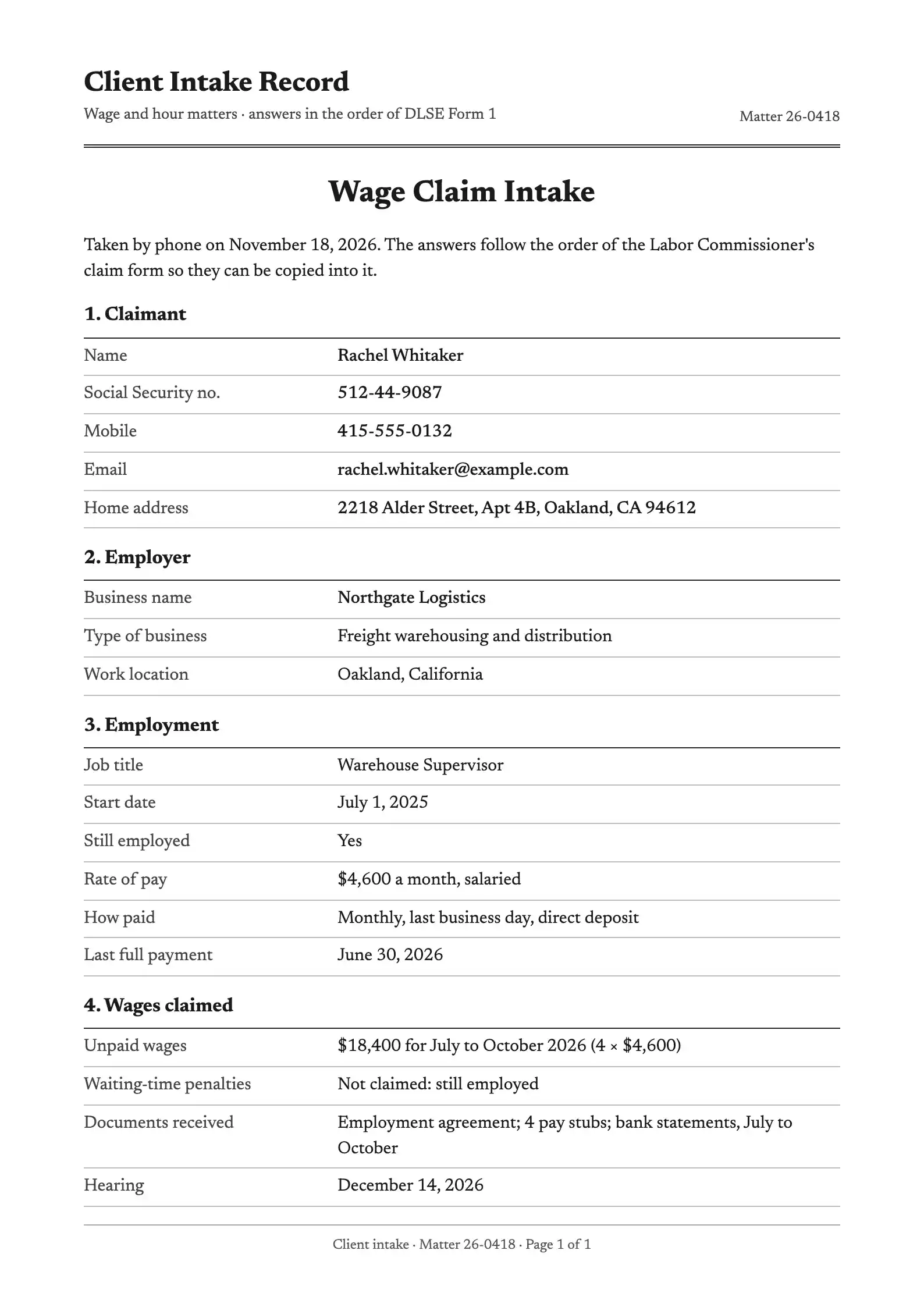
Rachel Whitaker called. Northgate Logistics has not paid her for four months. Draft the wage claim from the intake form and the pay stubs in this folder.
client-intake.pdfPages: 11 / 1
Your AI model provider receives these pages as text with stand-ins, not as a PDF file. They are drawn as pages here so you can compare.
replaced with a stand-inleft as written
What comes back to you
wage-claim.docx on your Mac, with Rachel Whitaker’s real name, Social Security number and address in it, claiming $18,400 from Northgate Logistics.
What DoeDesk replaced
The client’s name
Her Social Security number
Her mobile number, email address and home address
The employer’s name
What DoeDesk left as written, and why
The amount claimed and the months it covers: the claim is about them
The hearing date: DoeDesk does not replace dates
2Extract three clauses from every contract in a data room
You tell the agent
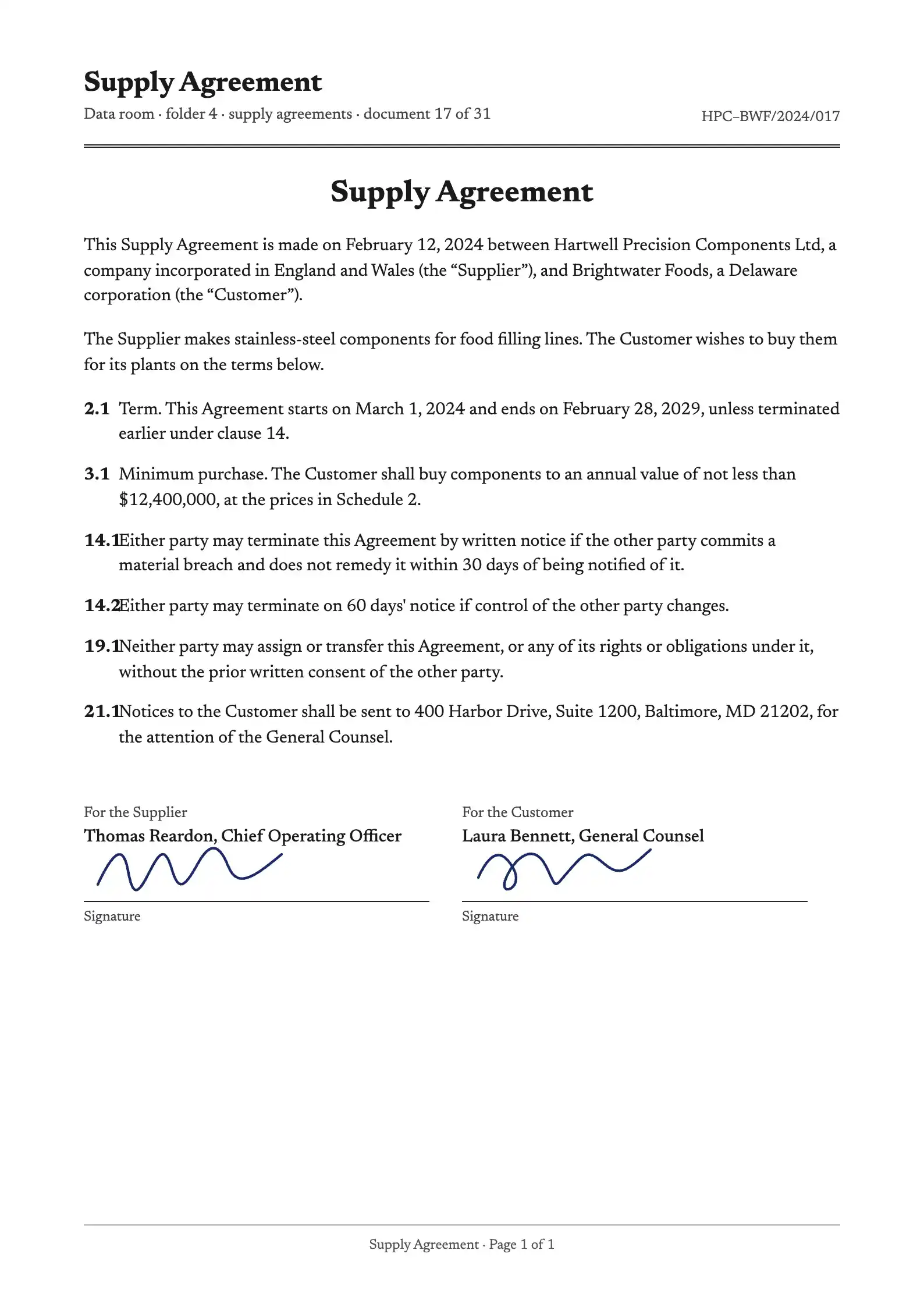
Go through the 31 supply agreements in the data room folder. For each one, put the assignment, change-of-control and termination clauses in a table, with clause numbers.
supply-agreement-17.pdfPages: 11 / 1
Your AI model provider receives these pages as text with stand-ins, not as a PDF file. They are drawn as pages here so you can compare.
replaced with a stand-inleft as written
What comes back to you
One table covering all 31 agreements: the three clauses, their clause numbers, and the real names of the parties.
What DoeDesk replaced
Both companies’ names
Both signatories’ names
The address for notices
What DoeDesk left as written, and why
The clause text and clause numbers: they are the work
The term and the annual value
The signatories’ job titles: a title is not replaced, and beside a rare deal it can point to a person
Questions lawyers ask about DoeDesk
Can a lawyer put client documents into Claude or ChatGPT at all?
The rules above turn on confidentiality and, in the US, on the client’s informed consent. With DoeDesk, the agent reads the document on your Mac, and Anthropic or OpenAI receives its text with a stand-in in place of each name and number DoeDesk detected. The text is also sent, as written, to DoeDesk’s detection service to find the names, unless you run your own detection service. Tell your client and your firm exactly that, and let them decide.
What in a contract or a claim can still identify my client?
Everything DoeDesk does not replace: dates, amounts, clause text, job titles and unusual facts. A claim for a named sum against a company in a small industry can identify the parties without their names. A name that detection misses is sent as written. Before you send material that matters, open Settings, then Privacy, in DoeDesk: it lists each request and how many values were replaced in it.
Does using DoeDesk protect attorney-client privilege?
No. DoeDesk reduces what the AI company receives; it is not a ruling on privilege. In the Heppner ruling of February 2026, a US federal court held that a defendant’s own communications with a generative AI tool were not privileged. That decision turned on the terms of a consumer account and on the absence of a lawyer, not on masking. Check your bar’s guidance.
How DoeDesk works, and where each piece of text goes