Write claim appeals with AI, with patient names and IDs masked
For claims, appeals and insurance-approval staff at hospitals, clinics and insurers. DoeDesk does not make Claude or ChatGPT HIPAA compliant; this page shows what it does do, on two tasks.
The rules that stop claims staff putting patient records into ChatGPT or Claude
A medical report sent to an AI company as written gives that company the patient’s name, date of birth and diagnosis. These are the rules that usually stand in the way:
United States: HIPAA
A hospital or insurer may give patient information to another company only under a business associate agreement. DoeDesk has no such agreement with you, and DoeDesk does not give you one with Anthropic or OpenAI.
HIPAA de-identification
The Safe Harbor method requires removing eighteen kinds of identifier, including dates and record numbers. DoeDesk leaves dates, record numbers and diagnoses in place, so text it has masked is not de-identified under HIPAA.
UK and EU
Health data is special category data under the UK GDPR and the EU GDPR.
DoeDesk changes what the AI company receives: a stand-in in place of each name and number DoeDesk detects. That is less than HIPAA asks for. Whether you may use it on patient records is for your privacy officer to decide. This page is not legal advice.
Two tasks on patient records, as you see them and as your AI model provider receives them
1Write an appeal from a scanned medical report
You tell the agent
These are scans of the medical report, the denial letter and the policy wording. Write the appeal: why the MRI and the surgery were medically necessary and covered by the policy.
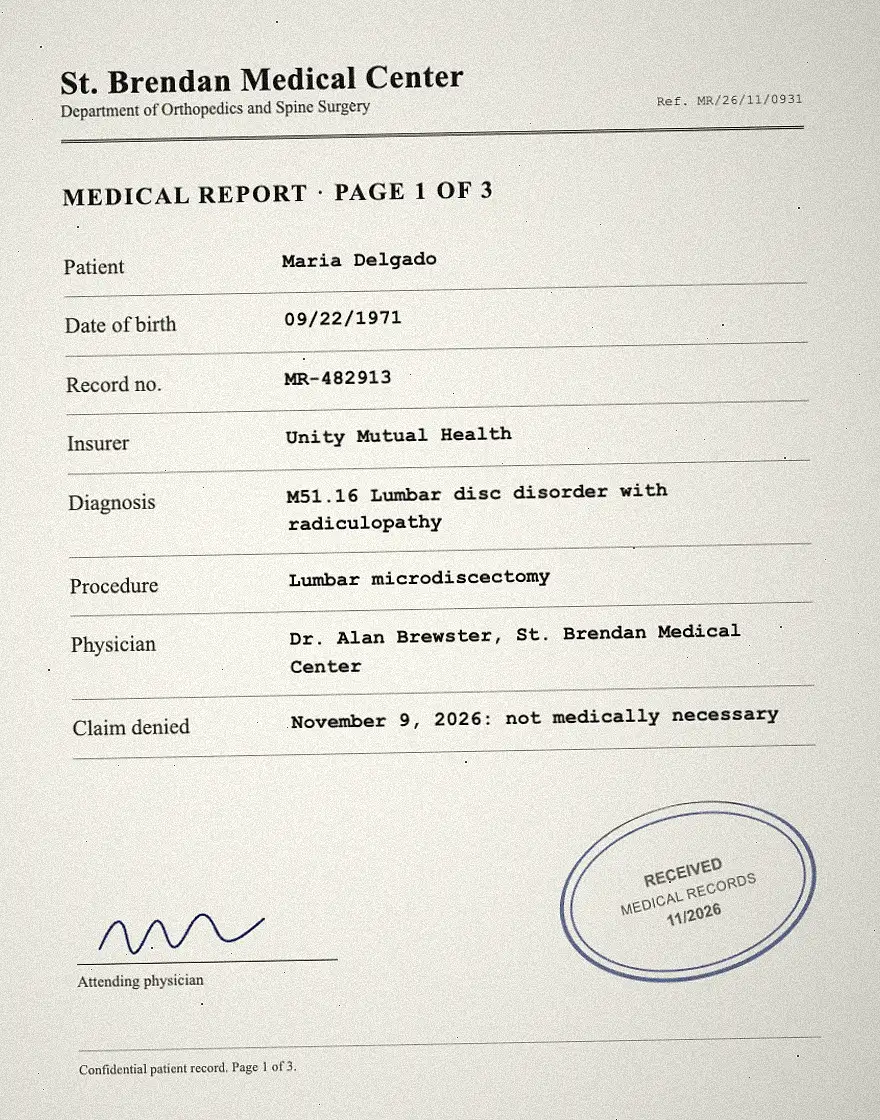
The scan on your Macmedical-report-p1.png
What your AI model provider receives by default: text, not the image
[ORG_MHNZZ] Department of Orthopedics and Spine Surgery
Ref. MR/26/11/0931
MEDICAL REPORT · PAGE 1 OF 3
Patient
[PERSON_E55M6]
Date of birth
09/22/1971
Record no.
MR-482913
[ORG_CA6MA]
[ORG_HHKG4]
Diagnosis
M51.16 Lumbar disc disorder with radiculopathy
Procedure
Lumbar microdiscectomy
Physician
Dr. [PERSON_YL8WQ], [ORG_MHNZZ]
Claim denied
November 9, 2026: not medically necessary
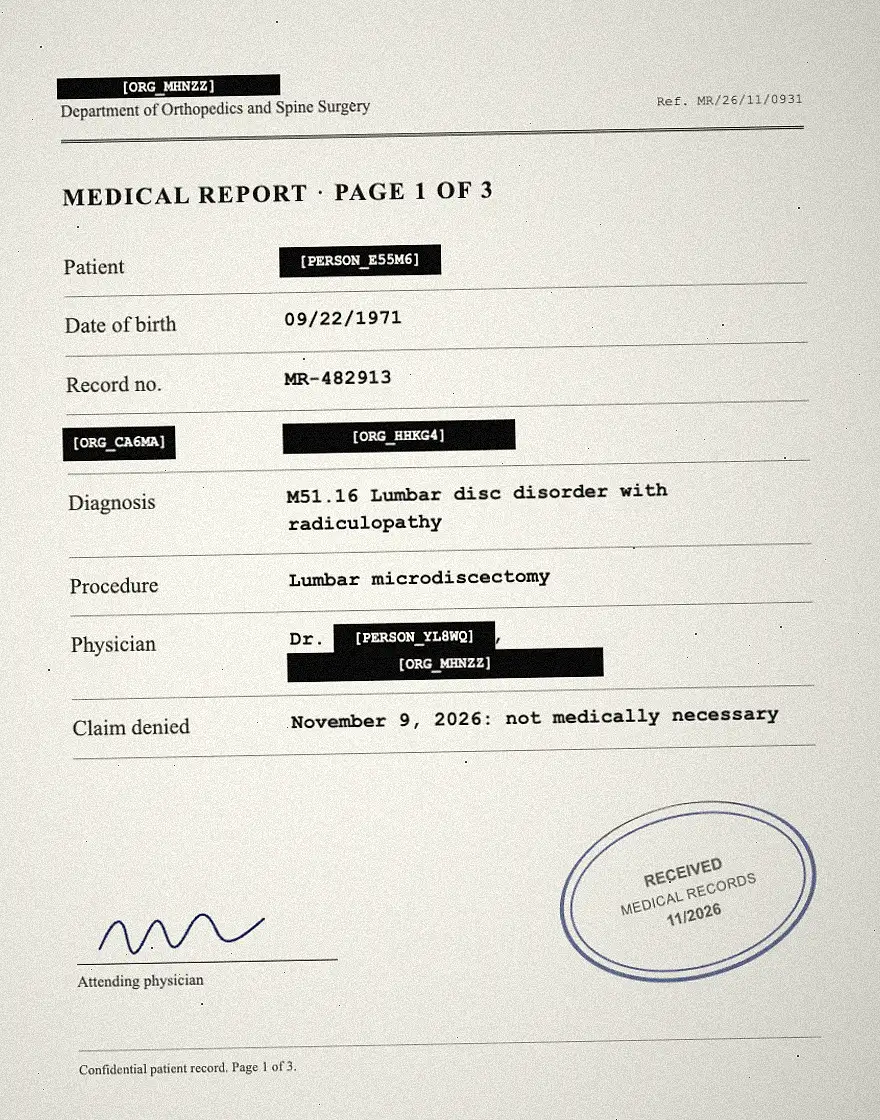
What your AI model provider receives with “Redacted image” on: the image, boxed
replaced with a stand-inleft as written
What comes back to you
appeal-letter.docx on your Mac, citing the report and the policy clause, with Maria Delgado’s real name in it. You retyped nothing from the scans.
What DoeDesk replaced
The patient’s name
The physician’s name
The names of the hospital and the insurer
The label “Insurer”. DoeDesk’s detection service took it for an organisation’s name; DoeDesk puts it back on your Mac like any other value
What DoeDesk left as written, and why
The date of birth and the record number: DoeDesk does not replace dates, and it did not detect this record number
The diagnosis and the procedure: the appeal argues from them
The date and reason of the denial
2Sort a month of denial letters by reason and deadline
You tell the agent
Read the 140 denial letters in this folder. Group them by denial reason, and list the ones whose appeal deadline falls in the next 14 days, soonest first.
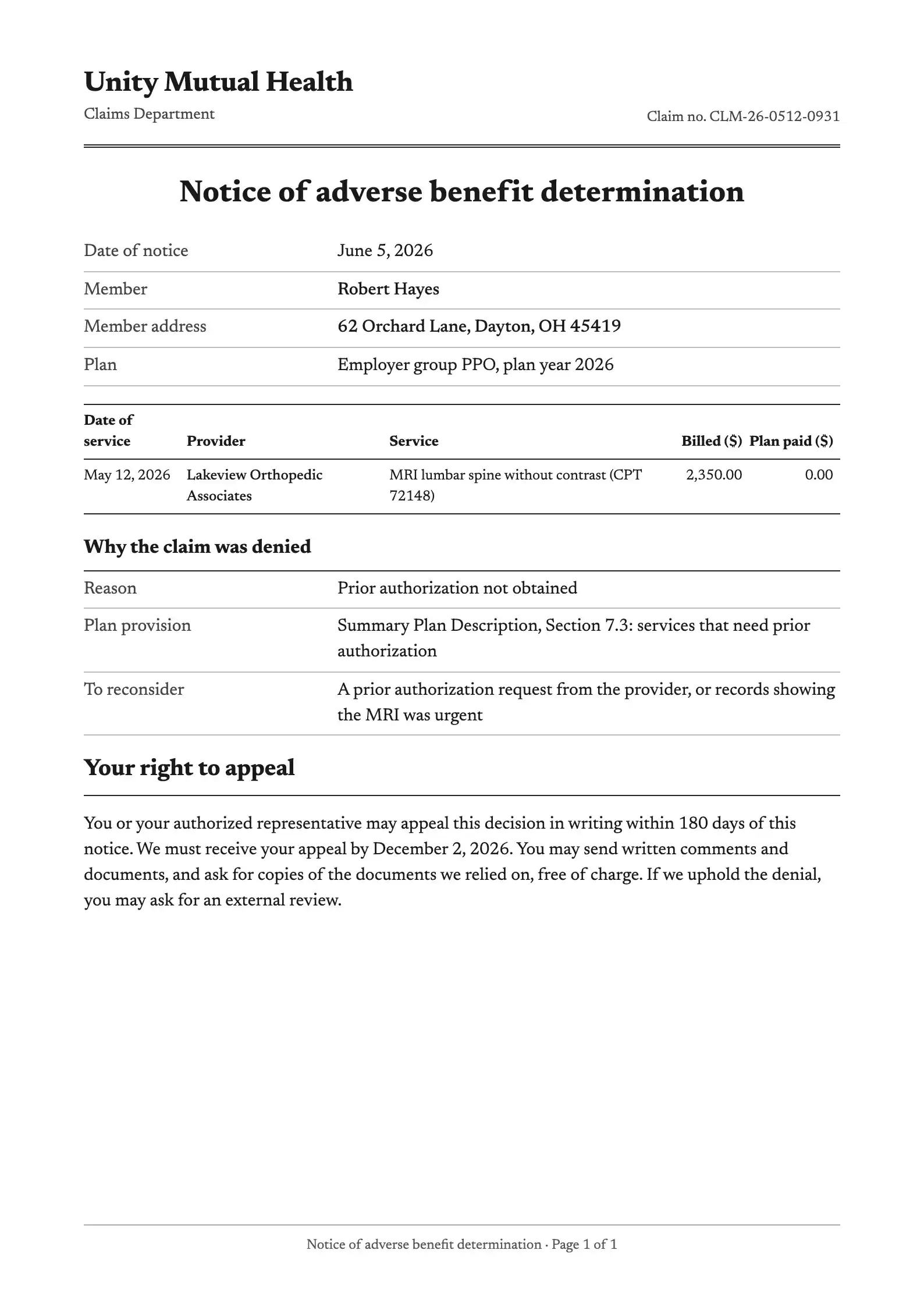
denial-letter-0931.pdfPages: 11 / 1
Your AI model provider receives these pages as text with stand-ins, not as a PDF file. They are drawn as pages here so you can compare.
replaced with a stand-inleft as written
What comes back to you
A table on your Mac: denial reasons with counts, and the letters due within 14 days, each with the member’s real name and the deadline.
What DoeDesk replaced
The member’s name and address
The provider’s name
The insurer’s name
What DoeDesk left as written, and why
The service, its date and the amounts
The denial reason and the appeal deadline: the sorting is done on them
Questions claims and approvals staff ask about DoeDesk
Does DoeDesk make ChatGPT or Claude HIPAA compliant?
No. There is no business associate agreement between you and DoeDesk, and the text DoeDesk has masked still contains dates, record numbers and diagnoses, so it is not de-identified under HIPAA’s Safe Harbor method. The medical report is also sent, as written, to DoeDesk’s detection service to be read and checked, unless your organisation runs its own detection service.
What happens to a scanned medical report?
DoeDesk sends the image to DoeDesk’s detection service in Jeddah, Saudi Arabia, which reads its text and finds the names and numbers in it. By default Anthropic or OpenAI then receives that text with stand-ins, and no image. If you choose “Redacted image” in DoeDesk’s Settings, under Privacy, the AI company receives the report itself, with a black box labelled with its stand-in over each detected value; the date of birth, record number and diagnosis stay visible, as they do in the text. You can download exactly what was sent. A report that cannot be redacted safely goes as masked text; one that cannot be read is withheld, and DoeDesk tells the AI that a file was withheld.
What is replaced in a medical report, and what is not?
Replaced: the names of the patient, the physician, the hospital and the insurer; phone numbers, email addresses, postal addresses and Social Security numbers. Not replaced: dates of birth and of service, diagnoses, procedures and reasons for denial. In our test, a medical record number was not detected and a member ID was replaced only in part. Check Settings, then Privacy, after a first run.
How DoeDesk works, and where each piece of text goes